What is meant by „fresh water technology“ at varmeco?
At varmeco, fresh water technology refers to systems in which drinking water is only heated at the moment it is drawn off - i.e. when the tap is opened (“instantaneous water system”). No supply of hot drinking water is stored in a tank, but the water is heated as required.
Why is this method more hygienic than a conventional hot water cylinder?
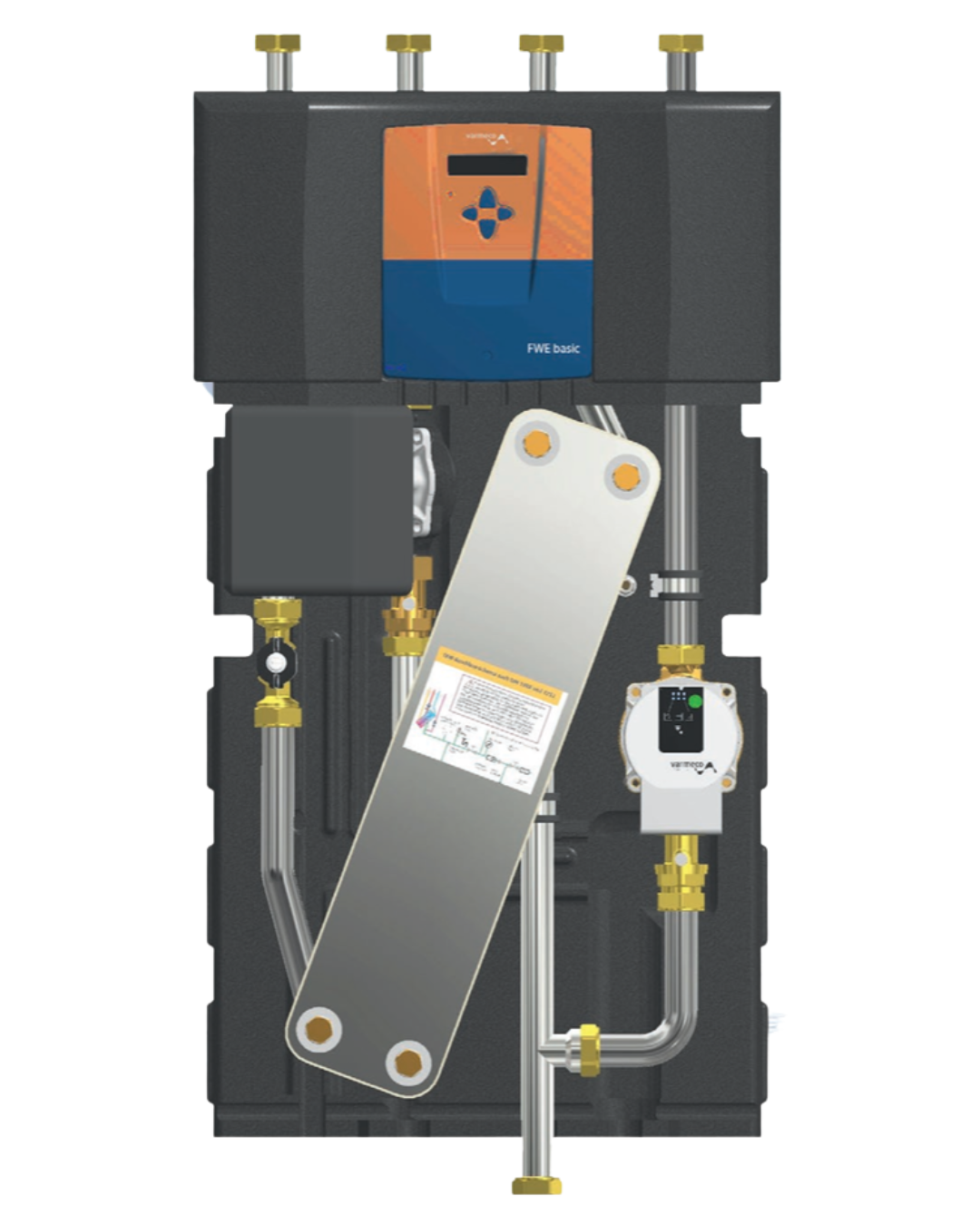
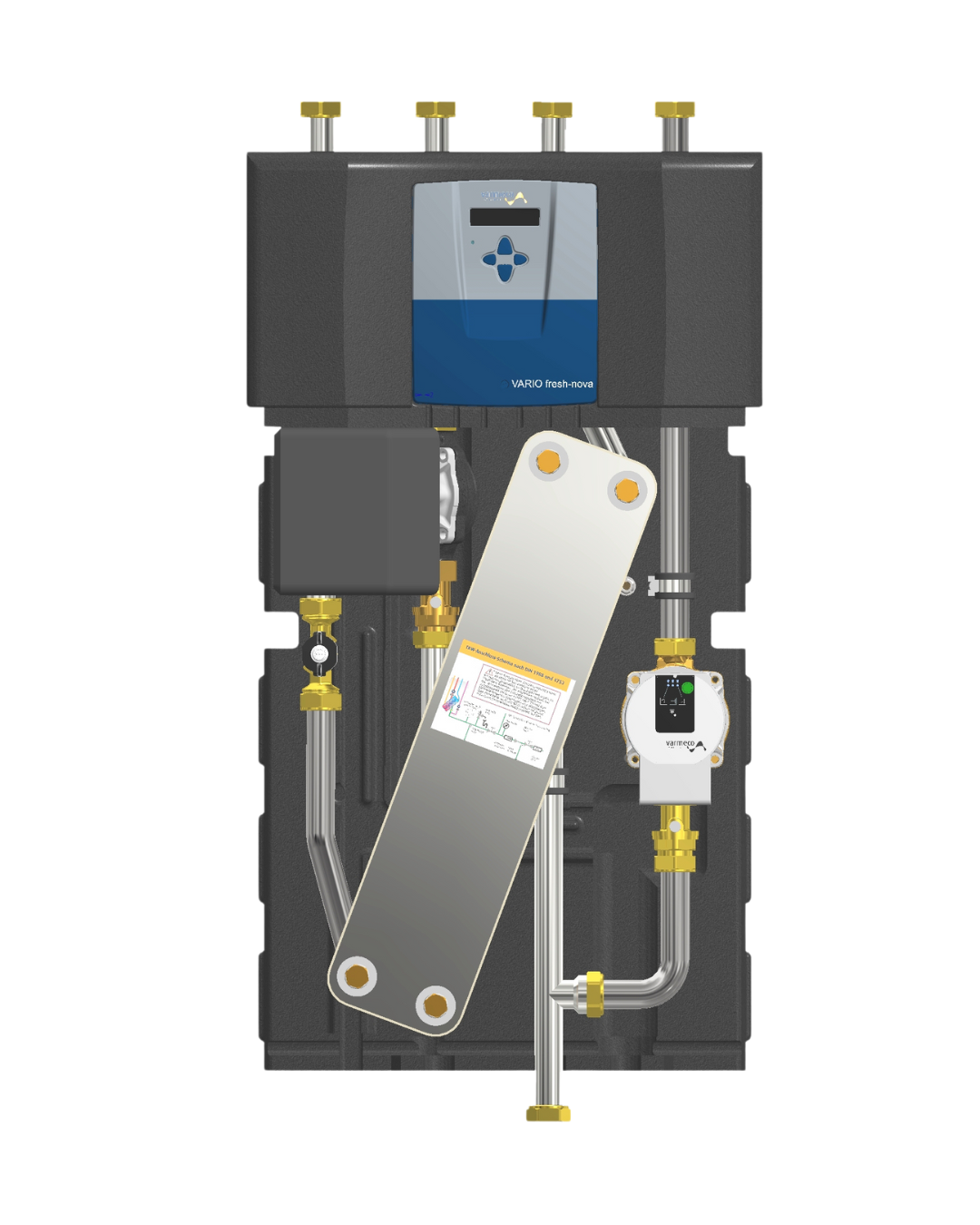
When a tap is opened, the integrated sensor registers the volume flow. A pump conveys heating water from an energy storage tank (e.g. buffer tank) through a stainless steel plate heat exchanger. There, the heat is transferred to the fresh drinking water using the counterflow method - and this is transported immediately to the tap.
How does hot water generation work technically?
When a tap is opened, the integrated sensor registers the volume flow. A pump conveys heating water from an energy storage tank (e.g. buffer tank) through a stainless steel plate heat exchanger. There, the heat is transferred to the fresh drinking water using the counterflow method - and this is transported immediately to the tap.
For which buildings or applications is fresh water technology suitable?
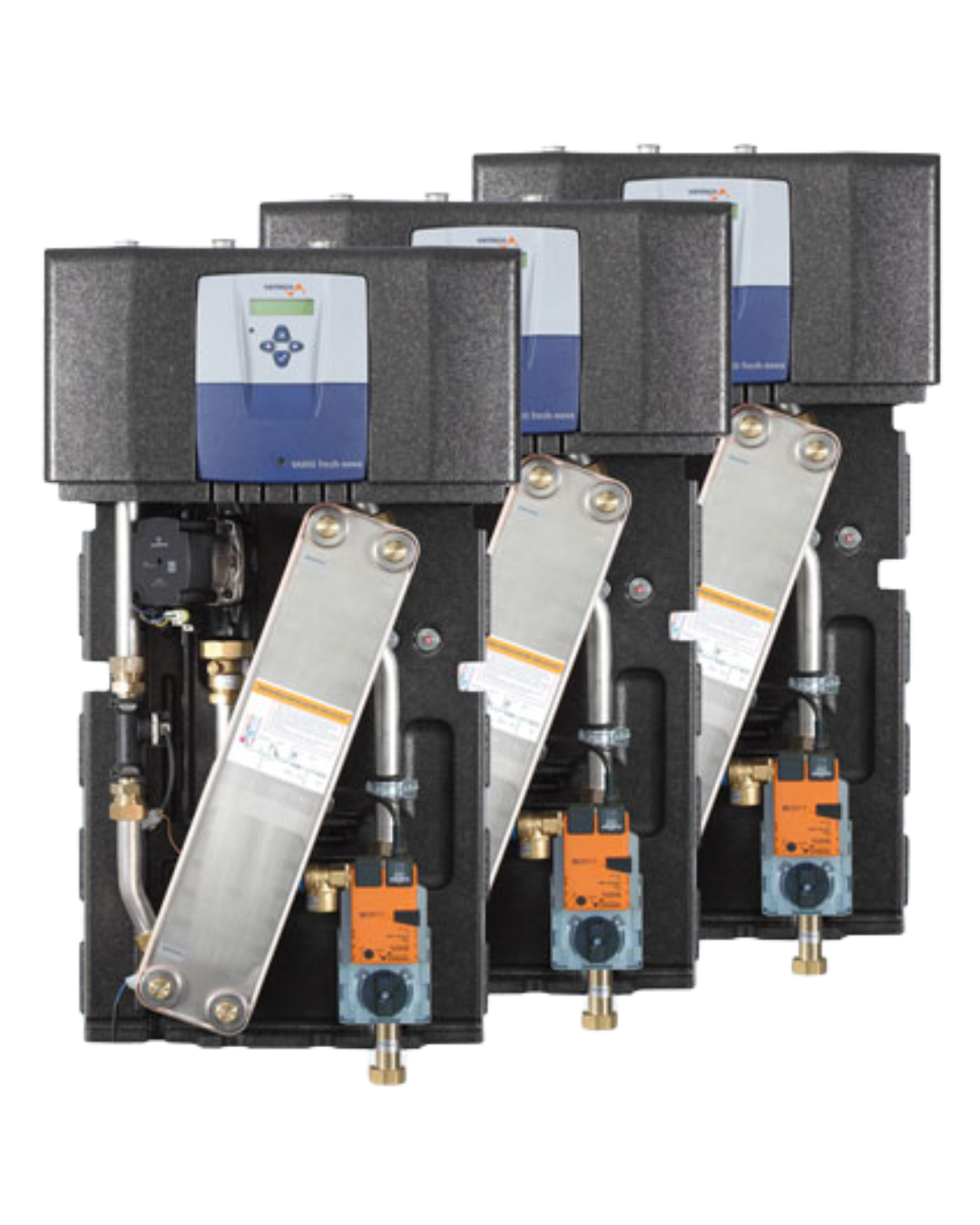
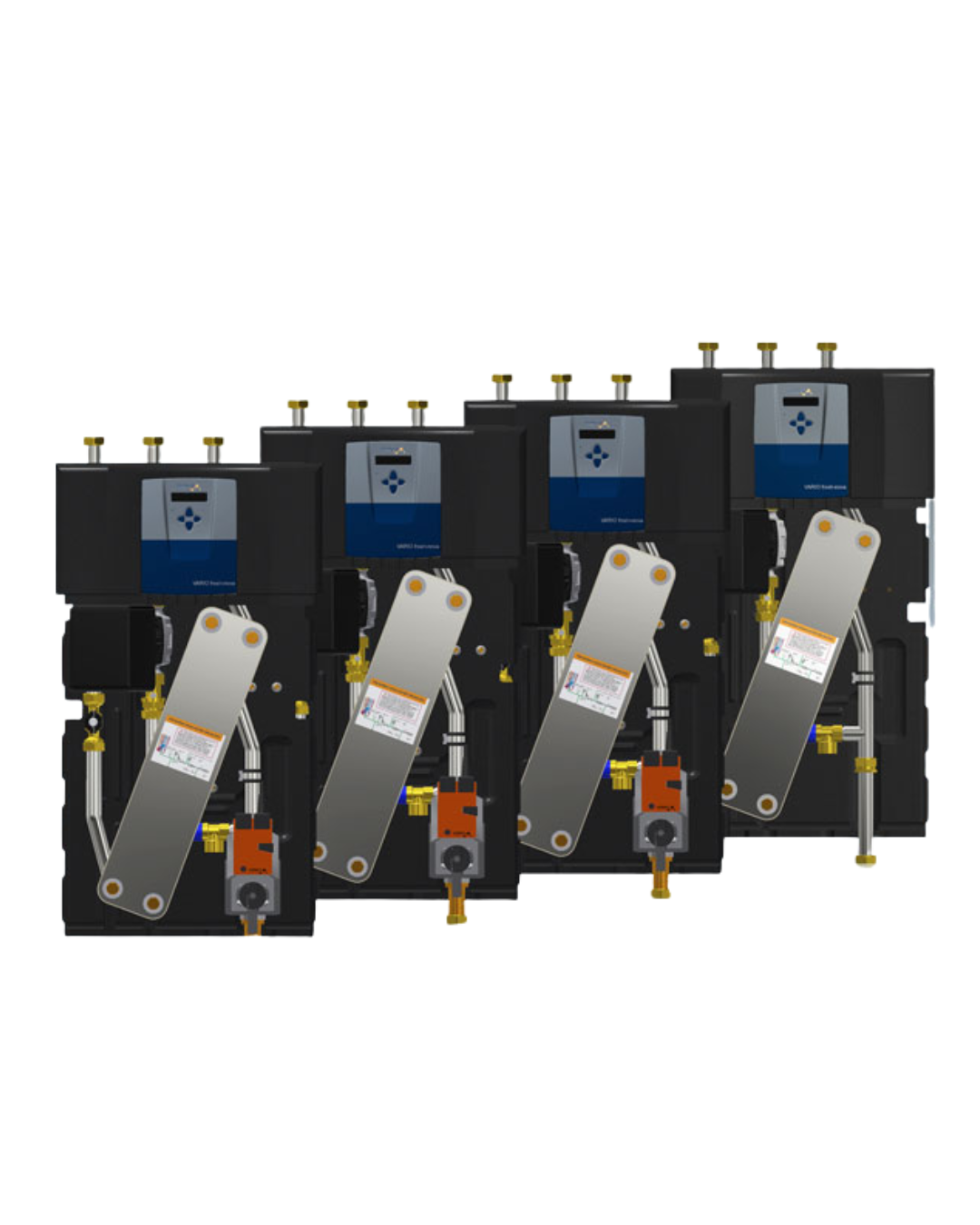
The varmeco systems are scalable and flexible - they are suitable for single-family homes, apartment buildings and commercial or industrial buildings. For larger hot water requirements, several devices can be cascaded to cover high volume flows.
How does varmeco ensure constant hot water temperatures with varying consumption?
Electronic control: The controller automatically adjusts the flow rate and pump speed depending on the dispensing volume. This keeps the temperature constant for both small and large quantities - not too hot, not too cold, just right.
What happens if a lot of hot water is needed (e.g. several showers + washbasins at the same time)?
In such cases, a cascaded arrangement of several fresh water heaters can be used. This allows very high tap rates to be achieved - maximum volume flows of up to around 400 l/min with appropriately dimensioned systems.
Can the system be combined with renewable energies (e.g. solar, heat pump)?
Yes - because the fresh water heaters usually draw their heat from a buffer cylinder. This can be fed by solar thermal energy, heat pumps, biomass or other heating systems. This enables environmentally friendly and energy-efficient water heating.
What about maintenance and scaling compared to conventional hot water storage tanks?
Because no drinking water is stored for a long time and is only heated when required, there are significantly fewer deposits or limescale problems. In addition, there is no need for regular draining or disinfection, as is necessary with storage solutions.