
Home stations
Home stations are the proven solution for decentralized domestic hot water heating in residential buildings. Due to different circumstances, there is a wide range of functional and hydraulic requirements that we can cover with our portfolio of electronically controlled station types.
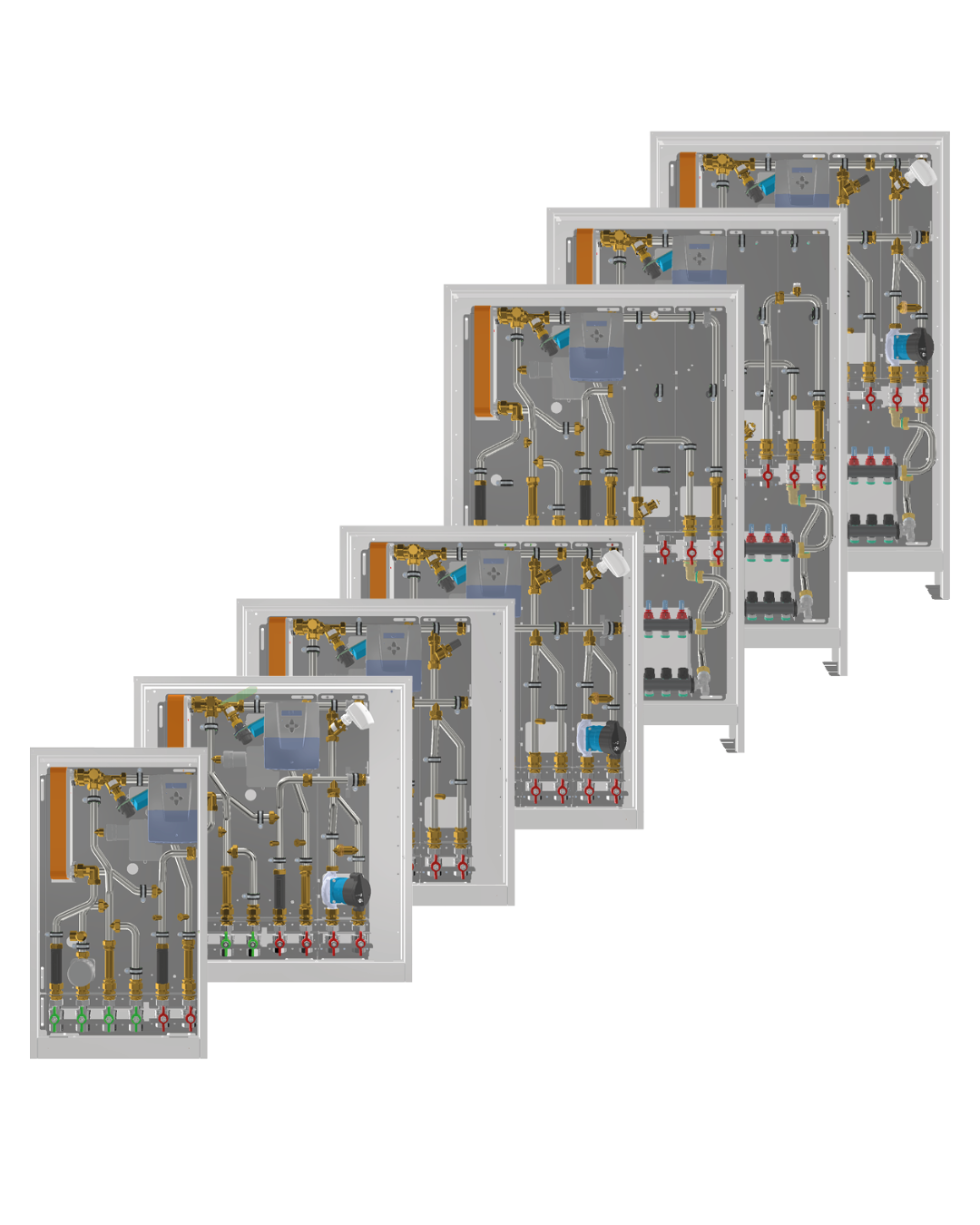
Frequently asked questions about home stations, simply explained.
What are home stations at varmeco?
How does a varmeco home station work technically?
What are the advantages of this decentralized solution?
Short pipe runs → fast heat and low heat loss
- Hygienic hot water preparation on demand - without hot water storage tank and with low legionella risk
- Flexible modular construction: Apartment can be individually equipped or extended later (e.g. drinking water + heating circuit).
For which buildings and living situations are home stations suitable?
Ideal for apartment buildings, new builds and renovations - wherever residential units need to be supplied separately and work hygienically and efficiently.
What functions can a varmeco home station perform?
- DHW heating using the flow-through principle
- Optional circulation pump control for hot water circulation
- Heating circuit control for room heating (e.g. controlled underfloor heating or radiators)
How hygienic is hot water preparation with a home station?
Very hygienic. The drinking water is heated using the flow-through principle and is not stored. This means there is no stagnant hot water - a decisive advantage in terms of legionella and general drinking water quality.
Do home stations require regular maintenance?
How energy-efficient is a varmeco home station?
Home stations are energy-efficient as they prepare hot water using the instantaneous principle. In accordance with DVGW W 551 and DIN 1988-200, the obligation for legionella protection temperatures (60 °C/55 °C) does not apply if the 3-liter rule is observed. This means that the hot water temperature and subsequently the supply temperatures can be lowered. In terms of performance, our home stations are designed for a slight increase (+5 K)t.
Can a home station be retrofitted or extended?
How does a home station affect operating costs?
The option of lowering the hot water temperature in accordance with DVGW W 551 and DIN 1988-200 reduces energy consumption. This increases the efficiency of the overall system and enables the optimum use of low-temperature heat generators such as heat pumps.